
Residents of the Gbawe West Electoral Area in the Weija Gbawe Municipal Assembly have been grappling with an acute water crisis for six months, despite consistently paying their water bills.
Once-reliable taps have run dry, leaving the community to seek alternative ways to access this essential resource. Many residents have resorted to purchasing water from private suppliers or relying on boreholes and wells, which come with additional costs and challenges.
The prolonged water shortage has significantly disrupted daily life and raised concerns about hygiene and public health in the area. Residents are calling on the Ghana Water Company Limited (GWCL) and local authorities to address the issue urgently and restore a consistent water supply.
“The water situation here is appalling. We’ve had to visit the waterworks to report the issue, but unfortunately, nothing has been done about it,” Ernest Esuman, a resident said.
Residents shared their daily struggles to secure water for basic needs.
Comfort Tetteh Wayo, a resident, asserted, “The water crisis here is severe. We’ve not had water flowing through our taps for approximately eight months. As a result, we’re forced to purchase water.”
Celina Allotey also said, “I can confirm that we’re experiencing a water crisis. I’ve resorted to walking long distances to fetch water. As I speak, I’m still searching for a solution.”
Frank Asiedu, a 36-year-old resident with special needs, shared his distressing ordeal of trying to access water for sanitation and other vital activities.
Those who can afford it resort to buying water from commercial tankers, but this comes at a steep cost. A single bucket of water can cost several cedis, an unsustainable expense for families already grappling with rising living costs.
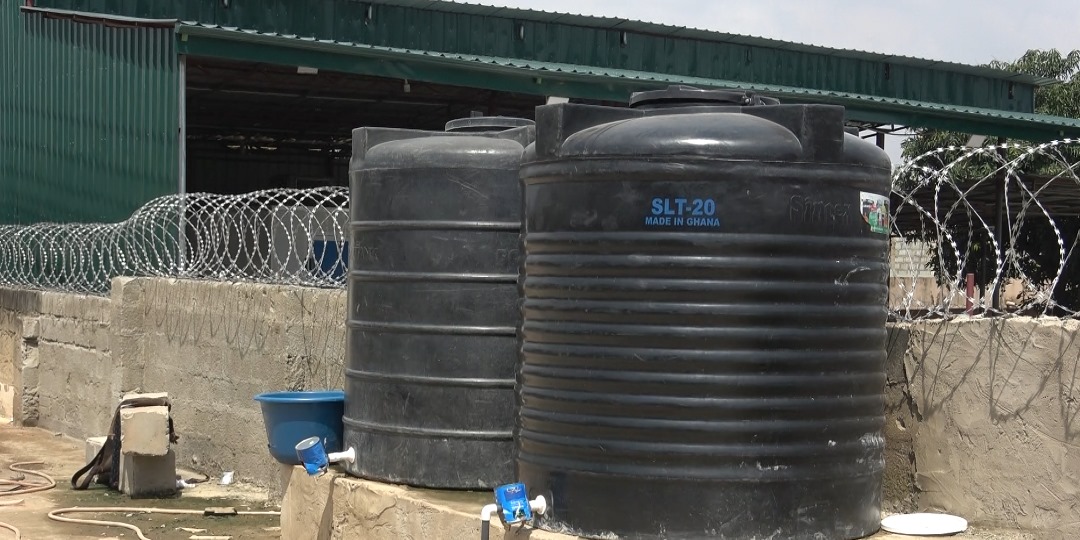
For those unable to afford tanker services, rainwater harvesting provides a seasonal and unreliable alternative. Others depend on the goodwill of individuals who have installed water tanks in the area, though these supplies are far from sufficient.
Despite the dry taps, residents continue to receive and pay their monthly water bills.
Hassana Yakubu, a resident further said, “We often fetch water from other areas and pay 140 cedis every week for it. The water authorities rarely communicate with us; they simply present us with bills to pay. I’ve even received a water bill for the month via WhatsApp, despite having no water supply.”
Comfort Annin, a resident stated, “We mostly rely on borehole water. One benevolent individual, known as Anointed, has been helping our community by purchasing polytanks to store water.”
Officers from the Ghana Water Company Limited (GWCL) were spotted in the area during Channel One TV’s visit, enforcing the payment of water bills.
Nana Kweku Egyir Gyapi III, Akyempemhen Akokobaatan of Ogua and a resident of Gbawe West expressed frustration over the GWCL’s lack of response to his concerns.
He hinted at plans to lead a demonstration if the situation remains unresolved.
A foreign national living in the area questioned why access to water, a basic necessity, remains a challenge in the 21st century.
The assembly member for the area, in an interview with Channel One News, lamented the authorities’ inaction despite her repeated attempts to seek their intervention.
“As the assembly member for this electoral area, I can attest that the water crisis is dire. For six to seven months, we’ve had no water flowing through our taps. It’s really terrible. For now, aside from advocacy, I’ve sought sponsorship from influential community members to construct boreholes as soon as possible,” Aminatu Issah, Assembly Member, Gbawe West Electoral Area underscored.
Efforts to obtain an official response from the GWCL revealed that a press conference is scheduled for Monday, 2 December, where the issue will be addressed.
#GhanaPolls2024
#CitiVerify
#ElectionBureau